Albacore Doesn’t Just Come in a Can

Fresh albacore with tomato-ginger relish and Asian mustard butter sauce.

Despite my neglect, the garden keeps providing.
What a difference a year makes. I never thought I’d feel at home in Corvallis (or blogging, for that matter) but here exactly a year later since the move and this project began, and I’m well at ease.
We’re frantically trying to weed and tame the yard this weekend after a summer and, well really, a year of neglect. But I’m at least adept enough to coax a few vegetables from the earth. The green (and purple and yellow) beans, tomatoes and remaining leeks are still abundant enough to source a meal.
Fresh albacore is the obvious reply to what to make for dinner this time of year.
Apparently there’s only about a week left in the season. The one-pound chunk we bought downtown today at Harry & Annette’s Fresh Fish just came in from the coast this morning. Fresh albacore is affordable, fleeting and so much more delicious and less fishy than the canned stuff. It’s not sushi-grade bluefin or yellowtail but it’s a milder still meaty fish that melds well with a range of flavors, particularly gingerly Asian marinades.
The most recent food column in the local Corvallis newspaper inspired me. Since we shy away from the grill, we roasted the fish at high-heat, 500 degrees. We whipped up our version of the fresh tomato-ginger “relish” and the hot mustard better sauce. I doubled the sweet onion in the relish since I lacked green ones. And some leftover lebni yogurt cheese stood in for whipping cream, yielding a tasty but curdled butter sauce.
My home-grown beans we steamed and sauteed with lemon, rosemary and chopped walnuts. Freshing but a tad bit bland, according to Dan. But overall a memorable meal.
I just wonder if cooking will continue to capture my attention in 2009-10 as it did, sustaining me, last year.
Being Julia

Pillowy perfect Quiche Lorraine and greens with a Dijon vinaigrette at Le Patissier.
It seems sacrilege for a budding food writer to avoid the foodie movie everyone’s talking about until now. Hey, I saw Food, Inc. before its release. My journalistic instincts just remain more muckraking than gourmet. But Julie & Julia beckoned. I couldn’t contain my curiosity anymore. In anticipation, I found myself grabbing lunch at our surprisingly excellent strip-mall French patisserie here. Le Patissier has delicious (and quick to disappear) almond cream and paste croissants. But the savory items, buttery quiches and salads with a snappy Dijon vinaigrette are also memorable. The bakery uses many local ingredients (strawberries in the tarts, etc.) but you’d never know, because they don’t advertise it for fear of being labeled “greenwashing.”
Julie & Julia was of course heart-warming. And Nora Ephron brilliantly melded Julie Powell’s memoir with Julia Child’s rebirth as a cook in France. I teared up several times, mostly in vicariously experiencing the letdowns and eventual joys the two leads had upon finally getting good news from editors/publishers/readers…our tenuous existence as food writers/bloggers/cookbook authors is in their hands. Of course Julie Powell’s self-doubts about the narcissistic nature of blogging, and her desire to forge on with this self-imposed project anyway, resonated with me. Perhaps the most poignant, but subtle, part of the film to me: when Julia cries, with envy, upon learning that her sister (who also married late) is expecting a child. Did she regret not having her own? Children would have compromised her career, she said, but she missed not having grandchildren. If only you could have one with out the other. It takes a void, for sure, to throw yourself headlong into something, as Julia Child did with French cooking.
But frankly most of her recipes, and much of French cooking, doesn’t really interest me. I’m only drawn to choice French desserts and pastries. I’ll attempt a few dishes: chocolate mousse, braised cucumbers, perhaps, and I’d love to learn to bone a duck. Julie Powell can also be a model of what I don’t wish to become. Sure, she had a great idea but could have poured much more curiosity and reporting into it. As with Harry Potter, I’m skeptical of the books everyone is reading or ordering at once. I’ll wait to turn to Julia when the trend cools down. At lest I’m not the only one who finds food of this style inaccessible and daunting.
Purple Things

Rajasthani Eggplant from Vij in Vancouver
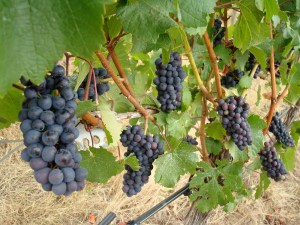
Ripening pinot noir at WillaKenzie.
Everything’s coming up purple these days. Eggplants. Blackberries. Plums. Pinot Noir grapes. Of course you wouldn’t know it looking at the picture of my Rajasthani Eggplant (with some leftover ofkra) dish. This aromatic Indian stir-fry featured lots of enticing spices — black cardamom seeds, asofoetida, green mango (amchur) powder — but way too much ghee (clarified butter). I made a special trip to the local Indian store for these far-flung ingredients, to be paired with local eggplant and the last remaining red onion from the garden. I would recreate this dish, with less fat. Vij’s is Vancouver’s famous Indian restaurant that we didn’t get to. We were too busy with the unparalleled Japanese cuisine there. Vij must have a regular column in The Globe and Mail. See other eggplant curry recipes from him here and here (with papaya, oh-la-la).
Then there are purple beans from the garden sitting the fridge. I’m not sure pickled beans are my thing. But I’m still refining my process. Fermentation, rather that quick pickles with vinegar, is what’s currently captured my imagination. I’m brining just a quart jar of red cabbage with caraway and celery seeds. It smells funny after just a few days, but hopefully that’s natural. The white film on top of the pickles apparently is!

Purple beans (among others) from my garden.

Purple cabbage kraut.
And the purple grapes are weighing down vines at wineries across the Willamette Valley. Dan’s colleague gave us his tickets to attend an open house at WillaKenzie Estate Winery in Yamill last week. Then the New York Times just so happened to name their wine the best value of Oregon’s pinot noirs (at @$27, it’s still not cheap!).
Other purple things? Italian plums to dry into prunes are plopping on the sidewalks here. I’ve borrowed the OSU extension service dehydrator to try some. Our next-door neighbors have a prolific tree whose fruit they shared last year. And purple fruit is even turning up in beers here. We finally sprang for the $7 Growler Sundays special at Block 15 and filled it up with, what else, boysenberry wheat beer.
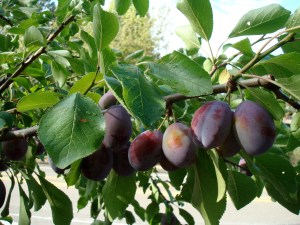
Plum-mertime.

Pickle Problems?: Week 2

Is that white scum mold?
Nurturing these pickles for a week, you become attached. I’ll be more than distraught if something goes wrong now. They still taste good but today was the first day I noticed the presence of white, filmy scum…mold I suppose. Perhaps my cover was too airtight? I replaced it with a pillow case to let the brew breathe a little better. Looks like my instincts were also right to add extra salt after the first day, according to Wild Fermentation master Sandorkraut. My recipe called for 1/2 cup salt to his 3/8 cup per 4 pounds cukes, so at least I already had that more saline brine he recommends. It’s nice to see that even experts botch their ferments when they first begin. It is a science but not an exact one. There’s plenty of room for trial and error here. Sandor also gave me the idea to try horseradish leaves in addition to the grape ones to keep the pickles crisp. Though I need to transplant my horseradish root into a big pot, else it take over the yard!
Next, I’ll try to make a kraut ferment with this beautiful young purple cabbage our friend Sang picked and gave to us today. We are dog-sitting sweet Mr. Baba (baba-sitting) while she and Antony head to Burning Man this week.
I’ll start small with kraut in a mason jar. Season it with caraway, celery seeds and/or fennel. I just hope the dog doesn’t get into it:) Any suggestions on kraut seasonings? Any advice on controlling mold while your veggies brine?

I'll grow cabbage next year.

Sleepytime.
Brined Pickles Day Five/Fermentation Fest
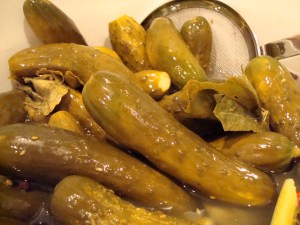
They already almost look, smell and taste like real kosher dills.

Best ever cardamom-pu-erh fermented kombucha tea at the fermentation fest.
What a difference five days makes. The stewing pickles have been transformed: an acidic broth has formed and infused the cucumbers’ once-firm flesh with a lactic tang that teams with life. Their color has change from vivid green to gray. Though delicious and aromatic with the essenses of garlic and dill, the brine has the off-putting look and clarity of dishwater.
At least all hope isn’t lost. I thought some of the top pickles were turning and going soft, so I lugged the full five-gallon jug down to the basement, which promises temperatures more consistent with the 75 degree threshold for problem fermentation to take place. But now they are safe and sound. My paranoia melted away as I sampled one, two, no five or six pickles this evening (bet you can’t each just one!). The whole basement smells like slightly-stinky pickles.
But it’s just a faint aroma compared to the scents wafting from the Ecotrust Building out towards the Thursday farmers market in Portland yesterday. We went up to check out the city’s inaugural fermentation fest, organized by Liz Crain, a fellow food writer there who is finishing up a Food Lovers’ Guide to Portland and specializes in wild-crafting and fermenting her own pickles, cider and dandelion wine. The main attraction: an appearance by the generous and gregarious Sandor Ellix Katz, or “Sandorkraut,” the guru of raw fermented foods and author of popular books on the topic.
The pungent smell of kimchi, krauts, kefirs and kombuchas perfumed the humid air in the Ecotrust gathering space. Most of it was delicious, though the tiny samples left you wanted for me. Hey, this was a free festival. But I had the rare experience of actually discovering a food I don’t like: natto. These gooey fermented Japanese-style soy beans stew in their own viscose sauce that has a (there’s no other way to put it) disenchanting semen-like consistency. I’ll just stick to my tempeh and tofu. But really anything to help me narrow my food choices down is a relief. Apparently, even in Japan, one-quarter of the population doesn’t care for the native food, so I’ve got good company. Sounds like another polarizing Asian delicacy: the spikey-on-the-outside, mushy-within, offensive-smelling durian fruit.

Not so into natto. But some folks swear by it.
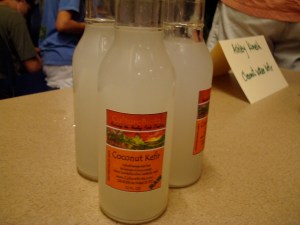
Coconut water kefir.
The drinks were what really stayed with me. Really delicate kombuchas, such as the one with spicy cardamom and aged pu-erh Chinese tea. Kefir, which normally describes fermented milk/yogurt drinks, as water-based drinks, such as the super-refreshing coconut water one at right. Hard ciders, which ran out before I got there. And unique professional-grade home brews fermented with special local ingredients, such as Douglas Fir tree needles and blackberries. The brewer gal is coming to OSU apparently in the acclaimed fermentation science program here. On our trip home, we schemed of having our own fermentation festival right here in Corvallis.

This brewer is coming to study fermentation science at OSU. What more does she need to learn?
Brined (Fermented) Dill Pickles: Day One

Let the brining begin!

What would a girl really need 20 lbs. of cucumbers for?
I never thought I’d need 20 lbs. of cucumbers in one sitting. But when you’re brining your own batch, you look for economies of scale. I had a five-gallon food grade salsa bucket. And my recipe called for four pounds of pickling cukes per gallon of your container. So there.
Finding the bumpy, relatively seedless pickling cukes isn’t always easy. Luckily, I could custom-picked ones from Heavenly Harvest Farm just down the road. The farm’s owner and manager were in my master food preserver’s course.
Once you secure your cukes, preparing the bucket for brining is pretty easy. You slice all the blossom ends off the cucumbers, to remove an enzyme that softens them. You make a salt water (with a little vinegar) solution. You throw in heaps of flowering dill heads (or dried seeds), garlic cloves, dried hot red peppers, peppercorns, some pickling spice, whatever spices you like, really. You put a weighted plate in on top, to push down and ensure all the cukes are submerged in brine. Otherwise they could mold and rot. Then you allow the fermenting cukes to steep in a dark place with temperatures no greater than 75 degrees. I’ve got the bucket in our coat closet but will move it to the basement if it heats up again. And I’ll be checking the bucket almost daily, to skim any scum off the top and sample the cukes to taste their progress. After three to four weeks of brining, these girls should be fully fermented. Then I can either refrigerate them or hot water process them in jars to make them shelf stable. Oh, and to keep the cukes crisp, I rolled up a few fistfuls of grape leaves from the neighbors vine and horseradish leaves from the root I planted and stuffed them into the brine. Using chemicals like alum or lime to crisp the pickles kind of scares me.
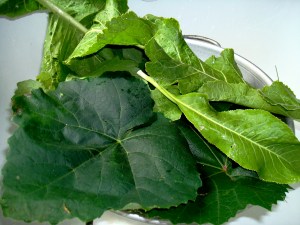
Use grape and/or horseradish leaves to keep the cukes crisp.
Speaking of fermentation, I plan to attend Portland’s first-ever fermentation festival this Thursday. Sandor Ellix Katz, the author of Wild Fermentation and food preservation poster boy, will be speaking there. He is living with AIDS and eats lacto-fermented foods, in part, for their health benefits.
Give a Boy (and a Poppy) Some Blueberry Pie

My blueberry blackberry homemade butter crust creation.

Berry pickin' source in Albany.
I don’t often have pie for breakfast. But I did today, in honor of Poppy on his birthday, because he made the habit of doing so, but of course only with fruit pies. It’s also not often I make a pie, with homemade butter crust. But it’s a habit that could grow on me.
When your partner turns 30, you bake him a pie. I won his heart six years ago with a key lime graham cracker crust one. This year’s blueberry with fresh foraged blackberries did the trick. I finally had a chance to test out my master food preserver blueberry pie filling recipe, after stopping on a whim to pick some at a mom-and-pop place in Albany. I’d rather not use lab-developed Clear-Jel modified corn starch, but I did for the first time because it imparts a pleasant consistency, so you won’t have a soggy, runny, mushy pie. I spiced up the utilitarian extension office recipe with grated nutmeg, lemon and lime zest and vanilla. This Portland kid’s prize-winning pie recipe inspired the lime. Blueberry needs such tang to heighten its flavors. I processed the jars of filling for 30 minutes so they melded together in a fruity goo.
What else have you made with your blueberries? I stumbled across this fabulous muffin recipe, which, with the ample maple syrup and melted butter, evokes the taste of fresh pancakes. Throw some crystallized ginger into the batter for kick. And with blackberries, consider milk with some sweetener and the muddled fruit.


Fresh muddled blackberry milk.
Foraged raw blackberries added to the inside just before backing gave the pie that extra umpf we were looking for. Topped with gelato from a downtown shop (why was this our first time there?) the result made for a pretty memorable dessert.

Fresh from the oven. Notice the egg wash is key for a glaze.
Perfect Picnic Fare: Paprika-Rubbed Pork and Egg Salad Nicoise

Egg Salad Nicoise.
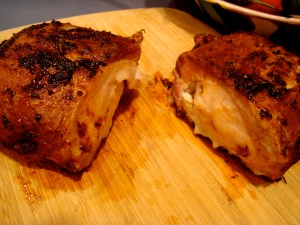
Paprika-and-Thyme Rubbed Pork Tenderloins, Served with Pickled Red Onions and Blue Cheese.
Looking to spice up your next picnic? The latest issue of MIX Magazine, for which I did my Newport restaurant reviews, offers some fresh suggestions. And the food tastes just as good when prepared and even consumed inside.
The Nicoise Egg Salad showcased a tantalizing array of flavors. I cut the eggs back to six, since I’m not a big egg salad fan, and added more tuna and chopped garden-fresh cucumbers instead to soak up the garlicky mayonnaise. A dollop of the fresh pesto I had made added some zest. Delicious with fresh sliced tomatoes. It was certainly worth splurging on Oregon albacore tuna for this dish.
Though we tend toward vegetarianism at home, we seem to be eating more and more meat these days. Perhaps it’s because Oregon has so many local, sustainable sources that we can feel good about (farms close enough that we can visit, which most seem to encourage). On 10 percent off member day at the food co-op, I sprung for a Lonely Lane pork tenderloin with this MIX recipe in mind. I need to get more into spice rubs. Applying the aromatic blend really gives you a chance to viscerally connect with the meat before slamming it in the oven or slapping it on the grill. Smoked paprika can be an elusive ingredient to find, but standard paprika is no substitute. And the earthy seasoning contrasted nicely with the tart onions and sweet blue cheese.


Pickled onions from my garden.
Making up the pickled red onions was extra fun since the bulbs came from my garden. Note to self: plant more onions next year. I’ve had real success with onions, garlic, leeks, lettuce and herbs — items so indispensible in the kitchen but often overlooked. When you’ve got them in the garden, they’re always on hand. Just two little cucumber plants have been incredibly prolific as well. I’m grateful and still in awe that I didn’t kill off everything.
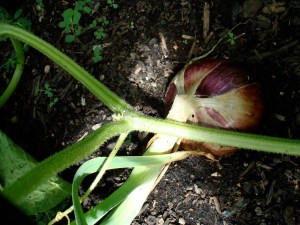
Onion right before pulling.

Onions and other friends waiting to be picked upon our return.
Foraging Again, through Brambles of Blackberries
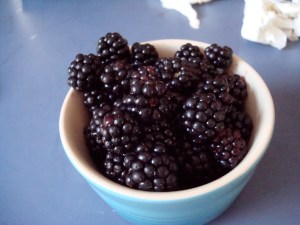
Fresh from the woods.

Lots of treacherous thorns to dodge.
Blackberries were about the last thing I should have bought upon my return to the Corvallis Farmer’s Market Saturday. Not because I don’t like them. Oregonians love to forage for and eat those wild blackberries so abundant here. But they loathe those same thorny canes that can become some of the most invasive plants, suffocating all other life out of your garden and yard with those looming, downward-seeking vines. Luckily, wild blackberry plants line the trails where I run, just minutes from our home. I didn’t realize they were already blackening (ripening) until I stumbled upon them in Bald Hill Park yesterday. Why buy blackberries when nature gives them up, generously, for free?
I set out to collect two cups more today for dessert. This time, I came prepared, pulling thick rubber boots over my jeans and bringing yard gloves to protect my hands from thorns. Blackberry gathering is like bee-keeping I suppose: the threat of pricks and stings somehow makes the fruit and honey gathered that much more sweet. I’m sure Novella Carpenter would agree. In 30 minutes (including my bike ride down the road and back), I had gathered what I needed.
Ivy Manning’s cookbook once again inspired me: this time, to make her uber-local Peach and Blackberry Hazelnut Crisp. Unfortunately, peaches are just barely in season here, but I still managed to snag some at the food co-op. Though ripe, the peaches sure didn’t seem freestone, clinging as they did to their pit. The blackberries: foraged. The ground hazelnuts, from nearby Hazelnut Hill farm. The Quaker rolled oats didn’t quite belong. Add chopped crystallized ginger to the fruit mixture if you have some lying around. Top with vanilla ice cream. I used vanilla coconut milk cream, because the pricey concoction was $2 off. Now if I could only forage for peaches.
Hang On Little Tomatoes

The Early Girls in late June.

The Early Girls Now.
What a joy it is to return to ripening tomatoes. Thanks to watering by our house-sitter, the plants seem to have survived, albeit with some brown blossom end rot covering some tomato bottoms, due to my negligence about their calcium needs. Back in late June, I poured some whey and broke up some oyster shells around the plants to give them calcium but perhaps not enough. If they’ve already fruited, is it too late to prevent the green ones from getting this rot? At least the rot can be cut away and does not seem to really compromise the sweet taste of a ripe tomato.
Though we didn’t get home until 1 a.m. Saturday, I ran right out to the garden, fumbling around in the dark, feeling for those ready tomatoes. Nevermind that some were a tad overripe and less umami tart. I had to have a midnight snack of them with olive oil and basil, right away.

Real tomato late blight:(/Flickr Creative Commons/By Filthy Phil (Bert 2332)

Blossom Butt Rot.
Fortunately, late tomato blight isn’t plaguing Oregon as it has the Northeast, where it’s decimated this year’s crop, particularly those coveted heirloom varieties. Dan Barber’s piece on the blight and how it stems from industrial agribusiness practices caught my attention in the New York Times today. Yes, this season’s surge in backyard gardening is good thing. But the poignant irony is that all those gardeners, buying contaminated starts at the Wal-Marts and Home Depots of the world, helped propel the fungal disease’s spread. It appears it’s not enough to just eschew factory farm foods trucked in from across the country. Your garden starts should come from local, sustainable sources, too. Given all the hype about heirloom tomatoes, it’s refreshing to see Barber make a moderated plea for polyculture sources, include less sexy, more resilient plants bred at your land grant universities, like here at OSU:)
Fairing even better than my OSU-bred Oregon Spring plant, though, is my massive potted Early Girl vine. Given the generally cool summer nights here, our tomatoes are slow to ripen here, shyly reading themselves for picking by late September. Next year, I’ll stick more to the trusty Early Girl. And speaking of which, she’s the namesake of a great cafe in Asheville, N.C., that serves up farm-fresh Southern fare.

My Early Girls in Pesto Pasta Salad.
 BaltimOregon to Maine