Gluten-Free Goodness

Rebecka sinks her teeth into these chewy, sweet hazelnut and coconut (flourless) wafers.
I’ve fallen in love with a simple gluten-free cookie recipe just in time for a visit from my sister Elaine, who unsuccessfully tried to get me on the bandwagon when we visited her in Atlanta in January. My gluten-free friend George (the man behind Corvallis Local Foods) had a birthday party coming up, and I had bags of ground hazelnut and also almond flour to burn through. So I turned to this simple Piedmontese recipe for Italian Hazelnut Cookies from Eating Well magazine. I didn’t bother to skin the hazelnuts, because mine, from our local Hazelnut Hill farm, were already ground into a meal. Plus, I like the color, texture (fiber?) and flavor the thin skins provide anyway. All you do is beat the egg whites into stiff peaks and then mix that fluffiness in with the combined sugar and ground nuts and then bake. I added some coconut and cardamom to the mix to spice things up. The results are quite addictive. With no added oil or starchy carbs, one can almost be convinced these cookies are good for you.

This is a recipe to return to again and again, with endless possible variations. They’re really almost like roughed up tops of macaroons in a way. This weekend, I made the cookies with the almond flour I love from Trader Joe’s, coconut and chunks of chocolate in some. I was thrilled to finally have a use for the containers of long-forgotten egg whites I had frozen away. The key is to find a use for the whites and yolks at about the same time. Stay tuned for my mention of yolks in the aioli I made for a steamed version of stuffed artichokes last week.
Greek Avgolemono (Egg and Lemon) Soup with Sorrel and Morels
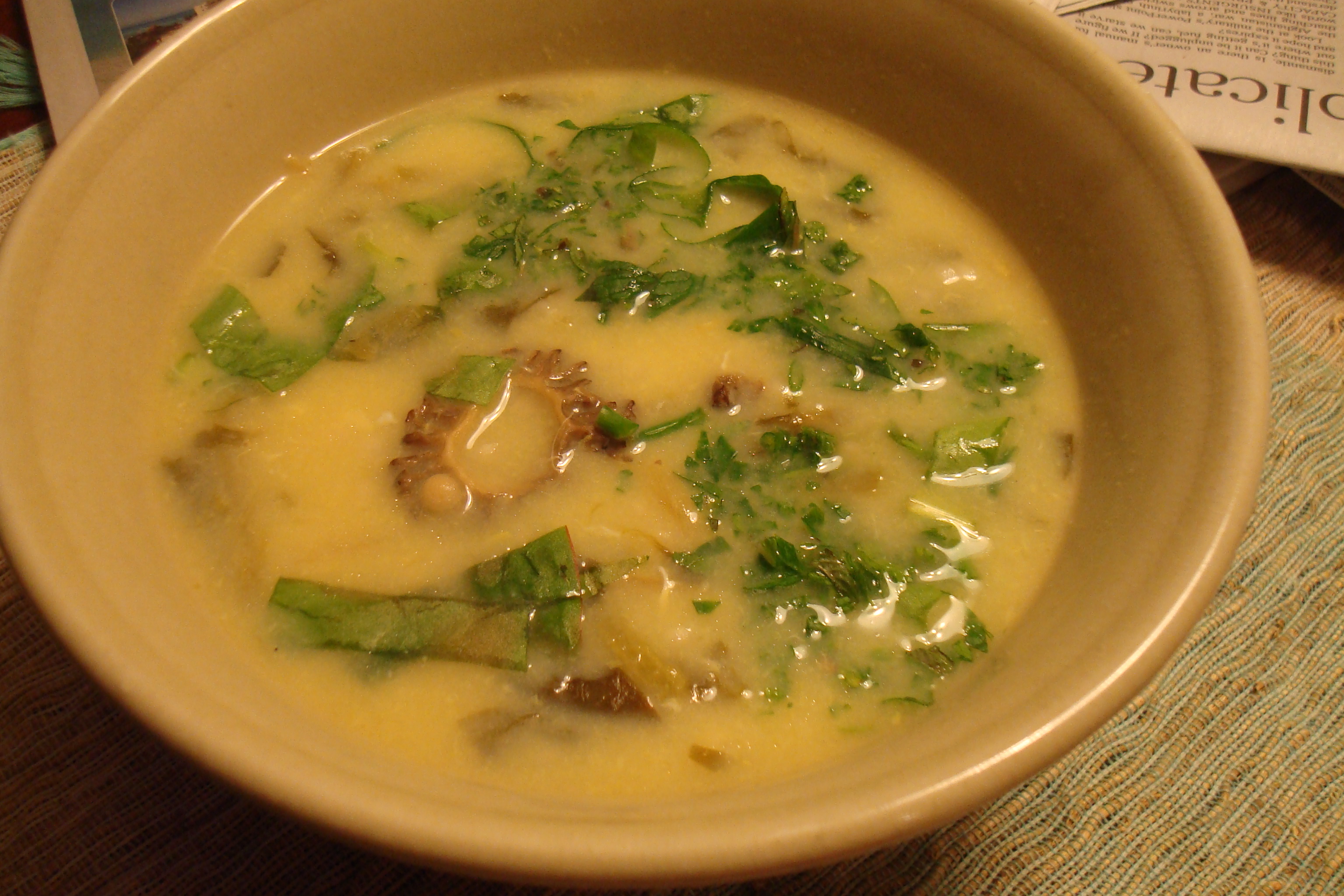
Creamy, lemony goodness, with some sauteed earthy rings of morels.
Some random seasonal ingredients I sprang for through Corvallis Local Foods came together in my souped up version of the Greek avgolemono (Lemon and Egg) soup Monday night. I fell in love with this simple soup while waiting tables the summer after my sophomore year of college at the now defunct Konsta’s Restaurant in Richmond. That soup was the one thing we were allowed to eat on the house.
Purchasing some tart sorrel leaves inspired my recipe. I had never heard of this cool weather spring green until chancing upon it at the market last year. Related to astringent rhubarb, sorrel is high in potassium and Vitamin C, but also oxalic acid, so it should be eaten in moderation, especially if you’re prone to kidney stones. I also just put one scrappy sorrel plant in my garden and look forward to harvesting the perennial next spring. Chefs seem to use it in salads, sauces and pestos and soups. It seems my impulse to pair lemony sorrel with creamy eggs was right.

What "moral" mushrooms.
Then I had homemade chicken stock in the fridge, after roasting a whole bird. Plus farm fresh eggs and plenty of lemons. So avgolemono, or to be exact, an adaptation of Mollie Katzen’s Moosewood “Mediterranean Lemon Soup” it would be. In a separate pan, I caramelized onions and then sauteed some cross-section circles of the morels I finally got my hands on from the Mushroomery and added that to the finished soup. I had plenty of mint and other herbs in the garden for garnish. Instead of rice, I added my favorite “Harvest Grains” blend of Israeli couscous, quinoa, orzo and split baby garbanzo beans to the mix.
The resulting soup was creamy and light but still heartier than such lemon-egg soups usually are. We had stuffed artichokes to round out the meal. More on artichokes TK in another post.
A Poached (Then Roasted) Chicken in Every Pot
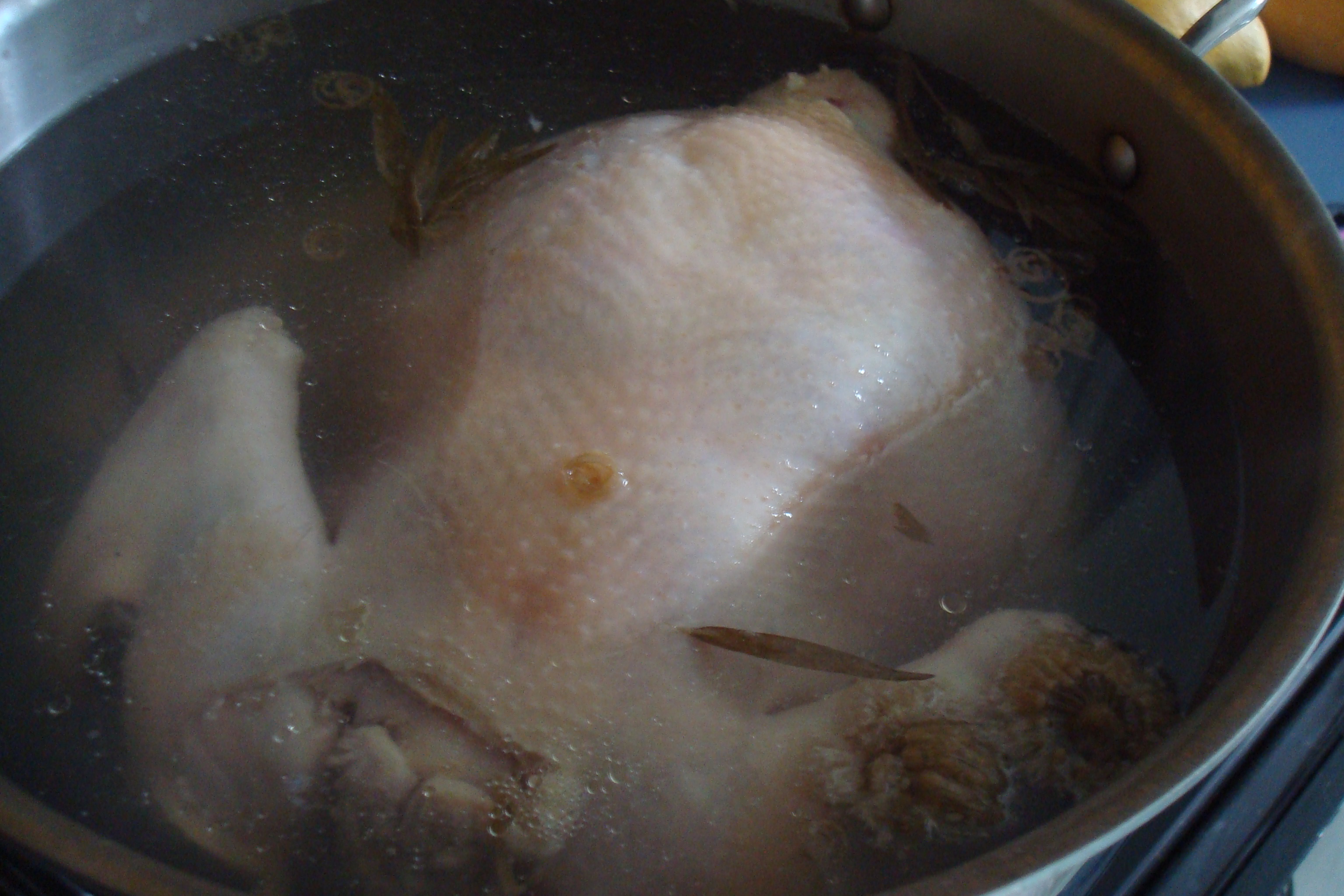
First poach the whole bird for 10 minutes.

Then roast at 450 degrees, melting the skin and rendering it oh so crispy.
Hearing Michael Ruhlman speak in defense of roasting one’s own whole chicken (a process that surprisingly still intimidates a number of time-crunched Americans) at a foodie conference in Portland late last month made me curious to try his (ala Thomas Keller) supposedly fail-safe method for a crispy yet tender bird.
But then Dan came across this hybrid process for “the perfect roast chicken” as a recommended link on the Marginal Revolution blog, beloved by epicurean economists everywhere. So per Felicity Cloake’s advice, I found myself poaching the whole bird for 10 minutes and then firing it at Ruhlman and Keller’s recommended 450 degrees. The poaching method appealed, since I was seeking extra moist breast meat for chicken salad. My mother’s beloved tarragon chicken salad recipe, of course, says to just poach the breasts and cut up that meat. But whole free-range chickens from Draper Valley were on sale, and I’d rather have a carcass to boil down into stock anyway.

A "keeper" chicken salad: poached meat tossed with greek yogurt and mayonnaise, a little champagne vinegar, salt and pepper, rehydrated dried cherries and golden raisins, a minced shallot, two tablespoons chopped fresh tarragon, chopped toasted walnuts this time instead of slivered almonds. Yum!
The secret to these roast chicken recipes? Pat the bird dry before roasting, so the skin crisps and doesn’t steam. Ruhlman and Keller forgo basting and/or covering the bird with pats of butter for that reason. I did splash some olive oil on the skin with salt but now I fear that wasn’t necessary. I also could have done a better job trussing, per Keller’s suggestions.
Roasting at 450 was 25 degrees higher than I usually go, and boy did the oven smoke as the dripping grease splattered. Do I need to self-clean my oven after this process? It’s hard to believe Judy Rodgers’ famous recipe from the Zuni Cafe calls for roasting at 480 degrees. My meat was tender, considering I bought a whopping 5.5 pound chicken, nearly double the size the pros recommend for the tenderest meat. But hey, it’s sustainable to bring them up in weight for not much more feed.
And boy was that chicken crisp, yet not 100 percent in a spots, perhaps because of the pre-poaching. But writing this makes me realize the Zuni Cafe recipe may be the way to go, with its dry salt rub in advance, now my favorite way to brine a Thanksgiving turkey. It’s about time I stopped ignoring everyone’s advice. Hey, Michael Ruhlman roasts a chicken every week. It takes practice to refine your technique.
Speaking of technique, for some reason I left covered the carcass I was boiling into stock. Duh. I guess I’ll have to now cook it down so it’s more flavorful for soup. At least I didn’t leave the cooling stock out on the stove overnight, a mistake I’ve made more than once. Stay tuned to see what kind of soup I’ll cook up this week.
Salty Ricotta Salata

Clean and crisp "kale" with ricotta salata and lemon-shallot vinaigrette.
Funny I should run across two recipes this week calling for salty, crumbly ricotta salata, that somewhat perplexing pressed, dried cousin of regular ricotta, which is made from cow or sheep’s milk’s whey.I’ve pitched up wedges of ricotta salata over the years but never really felt inspired to do much with it. On its own, it tends towards unpleasant chalkiness, with the faint smell of sweaty gym socks. I’ve crumbled it in salads and that’s about it.

Spicy-sweet paprika potatoes with ricotta salata (and feta).
So a small hunk of it sat in our cheese drawer for the past month and a half. I sprang for it (not an expensive cheese) at the Kiva Grocery Store while in Eugene. But that forgotten wedge came in handy when I chanced upon these two recipes: Kim Severson’s Kale (or rather Gourmet’s) and Ricotta Salata Salad and Honey Paprika Potatoes. I substituted mixed greens for the kale in the former recipe and some feta when the salata ran out for the later, but both were still good. Anywhere else you’ve seen ricotta salata turn up of late? Or other whey cheeses for that matter? I still don’t quite understand how cheese is made from this watery milk byproduct. I’ve also once tried this Norweigian Geitost brown whey cheese, which tastes marshmallow-y and too sweet.
The Milkman Cometh!
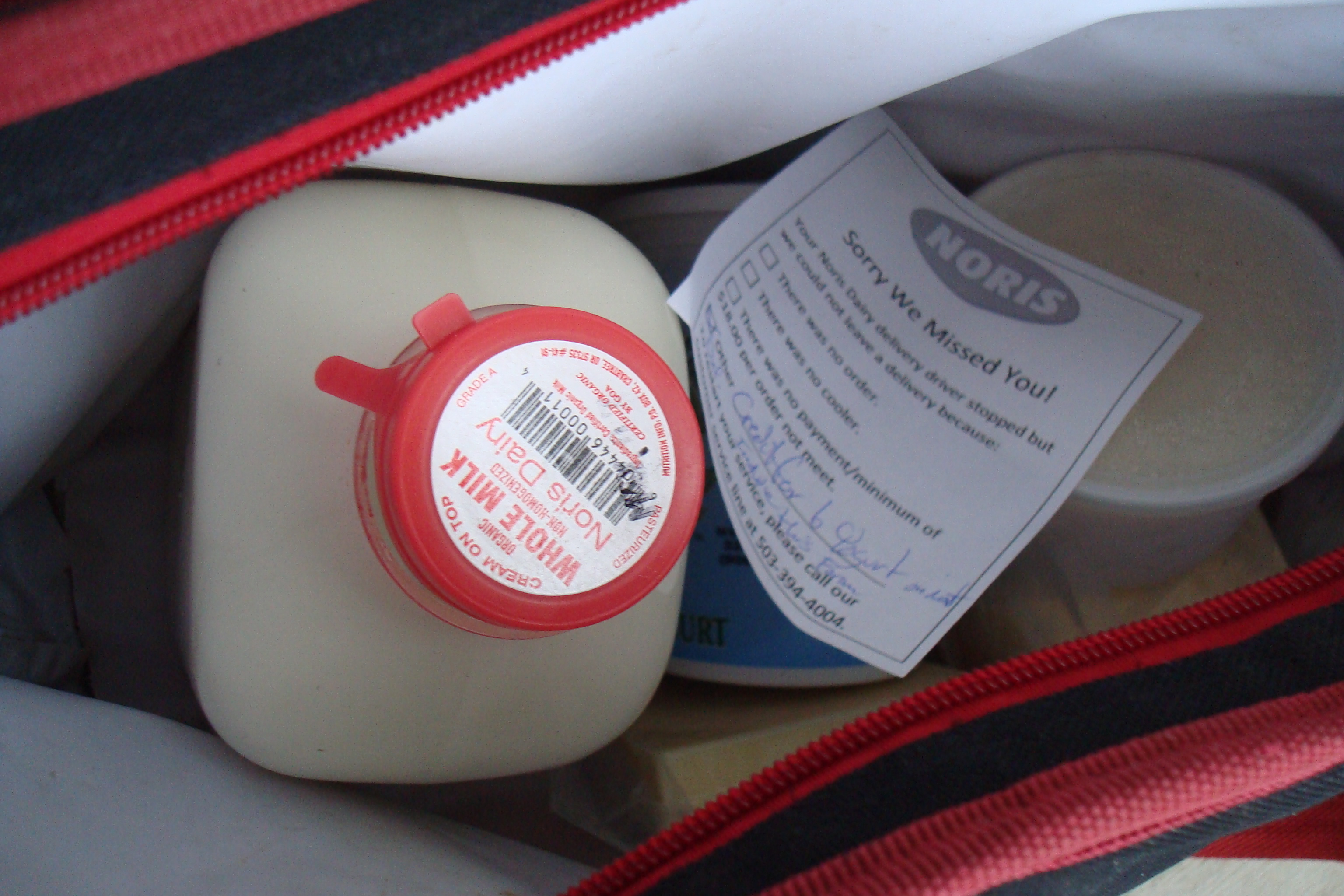
Ah, Pleasantville: Our First Delivery from a Local Organic Dairy.
What a pleasure to receive our first milk delivery today. Like canning and knitting and other homey rituals of yore, milk deliveries are making a comeback. I knew the South Mountain Creamery we used to patronize at Baltimore’s Waverly Farmers’ Market delivered, but we never took advantage of that service. And here in Oregon, we’ve usually purchase local Lochmead milk (until learning their plastic containers might contain BPA) and then increasingly Organic Valley. But who knew we had other options?
It turns out local organic Noris Dairy, in nearby Crabtree (Scio area) delivers to Corvallis once a week. Our friend Amy in Eugene had raved about their milk. I even got to sample some steamed in a frothy cappuccino she prepared for me. But it was only at the recent Chef’s Show-Off and Local Foods Fair Ten Rivers Food Web hosted at LBCC that I learned about the home-delivery service. At that event, Noris kindly plied us with samples of cream-top milk, chocolate milk, and several cheeses (the mozzarella was good: perfectly salted). Then I called in a delivery.
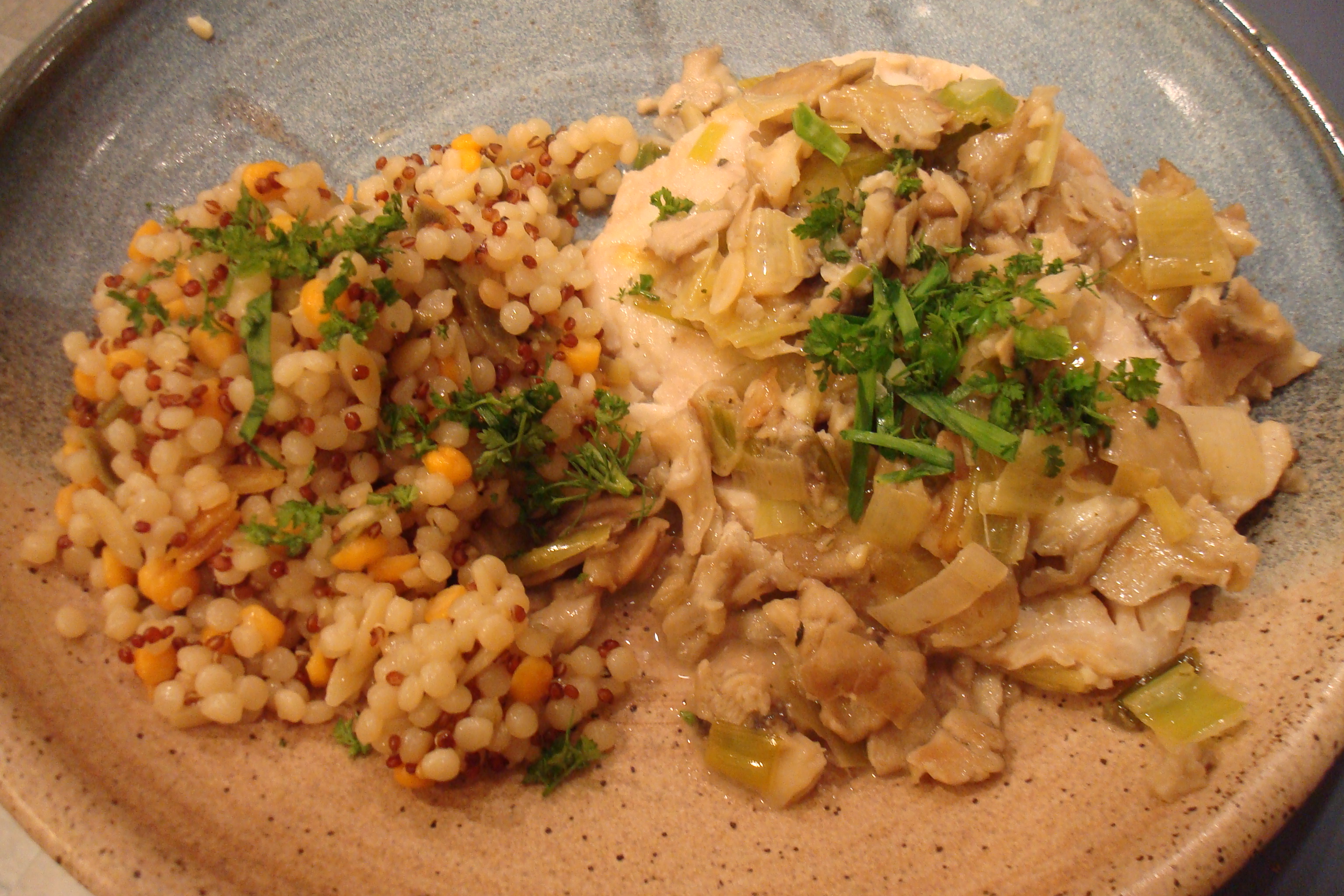
Sauteed some Oregon sea bass in Noris butter with maitake mushrooms and leeks, topped with chopped chervil from the garden.
When I returned home from teaching today, there the insulated bag sat on the front stoop, full of non-homogenized milk, blocks of cheese and salted butter and a container of ricotta. It’s less processed, and I believe pasteurized at lower temperatures, than your standard bland supermarket milk. They ran out of the fruity yogurts I ordered, but Noris left an I.O.U. to redeem with our next order. The butter added a lovely touch to the local sea bass (not to be confused with the over-fished Chilean variety) I sauteed up with some maitake mushrooms and leeks for supper.
Oregon Escargot?
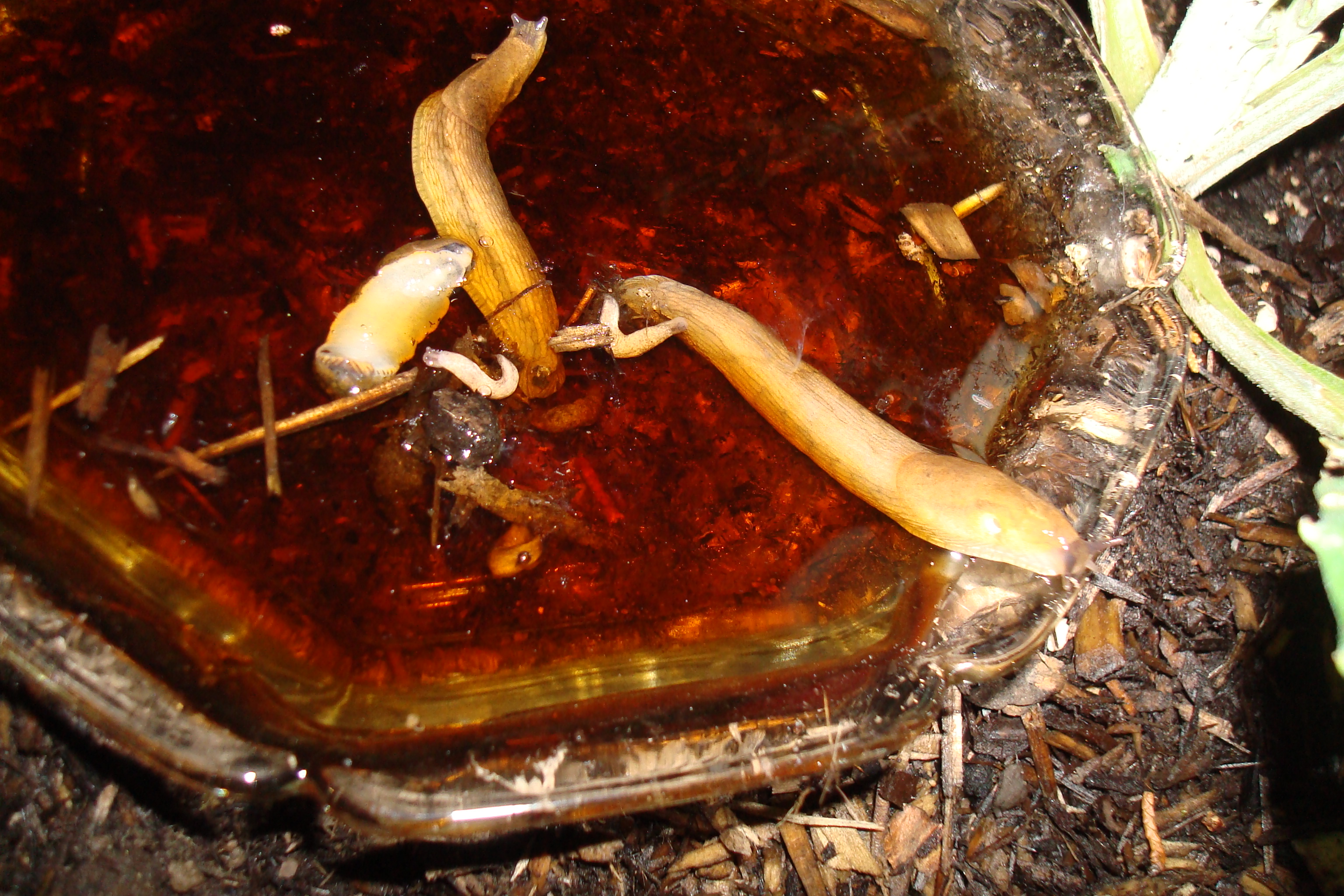
Those bastards devoured my fennel, artichoke and cilantro plants!
Hello again, dear readers. I’ve been blogging lots in my head these past few weeks, but somehow between mother-in-law and parents visits, teaching, and then this week traveling to Portland for the radio show and the Who’s Who of culinary conferences, actually writing up the posts got away from me. It’s hard to know where to begin again. So why not with slugs?

This spotted slug crossed our path on a hike.
The slimy mollusks plague our gardens out here in the Pacific Northwest this time of year. Though primordial creatures have devoured new cilantro and artichoke starts I planted. They really bring out your violent carnivorous side. En route to the compost bin at night, I’ve taking to smooshing any ones I find. I delight in their death. I’ve tried scattering gumballs in the beds, set beer-traps just this week and today finally resorted to Sluggo. If only we had backyard chickens. They would make good use of the protein.

Lagniappe with your organic produce.
But I have no interest in eating slugs. Apparently, you can eat them, if you first boil away their slime and then remove their digestive gland and some internal protective shell. I think I’ll pass. They might be served at this upcoming wild-crafted Slow Food Corvallis dinner that for some reason didn’t quite appeal to me. Sure, I’m a hypocrite. I’ll eat garlicky escargot (not that I do frequently). But I won’t touched slugs. Other than those I inadvertently consume while eating organic cabbage and salad greens. Consider them lagniappe that come with your fresh farmers’ market produce here.
La Grande Dame of food writers MFK Fisher perfectly captures my sentiments in her essay “Fifty Million Snails” in her first book, Serve It Forth.
I have eaten several strange things since I was twelve, and I shall be glad to taste broiled locusts and swallow a live fish. But unless I change very much, I shall never be able to eat a slug. My stomach jumps alarmingly at the thought of it.
I have tried to be callous about slugs. I have tried to picture the beauty of their primeval movements before a fast camera, and I have forced myself to read in the Encyclopedia Britannica the harmless ingredients of their oozy bodies. Nothing helps. I have a horror, deep in my marrow, of everything about them. Slugs are awful, slugs are things from the edges of insanity, and I am afraid of slugs and all their attributes.
But I like snails. Most people like snails.”
Bulgur-Quinoa with Sauteed Leeks, Apples and Kraut
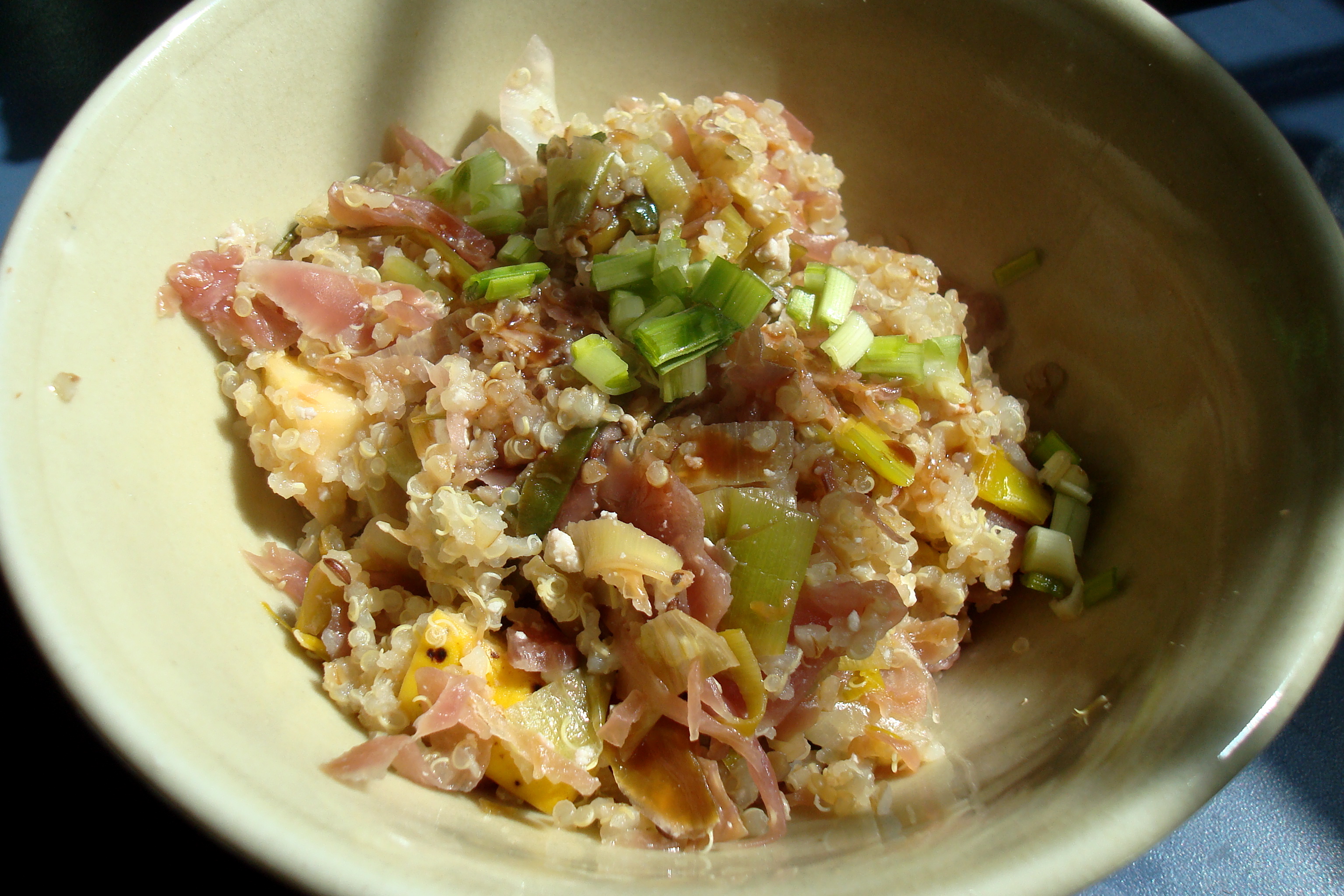
Kitchen scraps transformed into a memorable lunch.
Happily, I was hungry today when I landed on The Sausageterian blog, maintained by fellow FOODday contributor Sara Bir. An intriguing string of ingredients in her “Bulgur with Cabbage, Onions, Feta and Walnuts” inspired my own lunchtime concoction. I sauteed a spring green leek with a pat of butter, melted, and then added the remnants of my home-fermented pink (resulting from a blend of red and green cabbage) sauerkraut to the pan. Then I chopped up my last long-forgotten, almost dried apple texture, freckled Goldenrush (my last one!) and added it to the pan. Meanwhile, I poured boiling water over the 1/2 cup of bulgur I had to use up and simmered a cup of quinoa on the stove. When the veggies had sauteed about 10 minutes, I added them to the cooked grains. I served it with some crumbled ricotta salata and a drizzle of a fig-infused balsamic glaze from some fancy foods store. And dotted it with some diced green garlic on top. What a tangy, satisfying dish that will still be difficult to recreate. Dan thought for sure it had pork in it. That’s probably just because we associate sauerkraut and apples with bacon, as I’ve braised them together before. The chicken broth I simmered the quinoa in was the only meat product involved. Now a little browned lamb or pork sausage could be crumbled into this mix. That’s something I bet The Sausageterian would approve of.
Horseradish and Tarragon
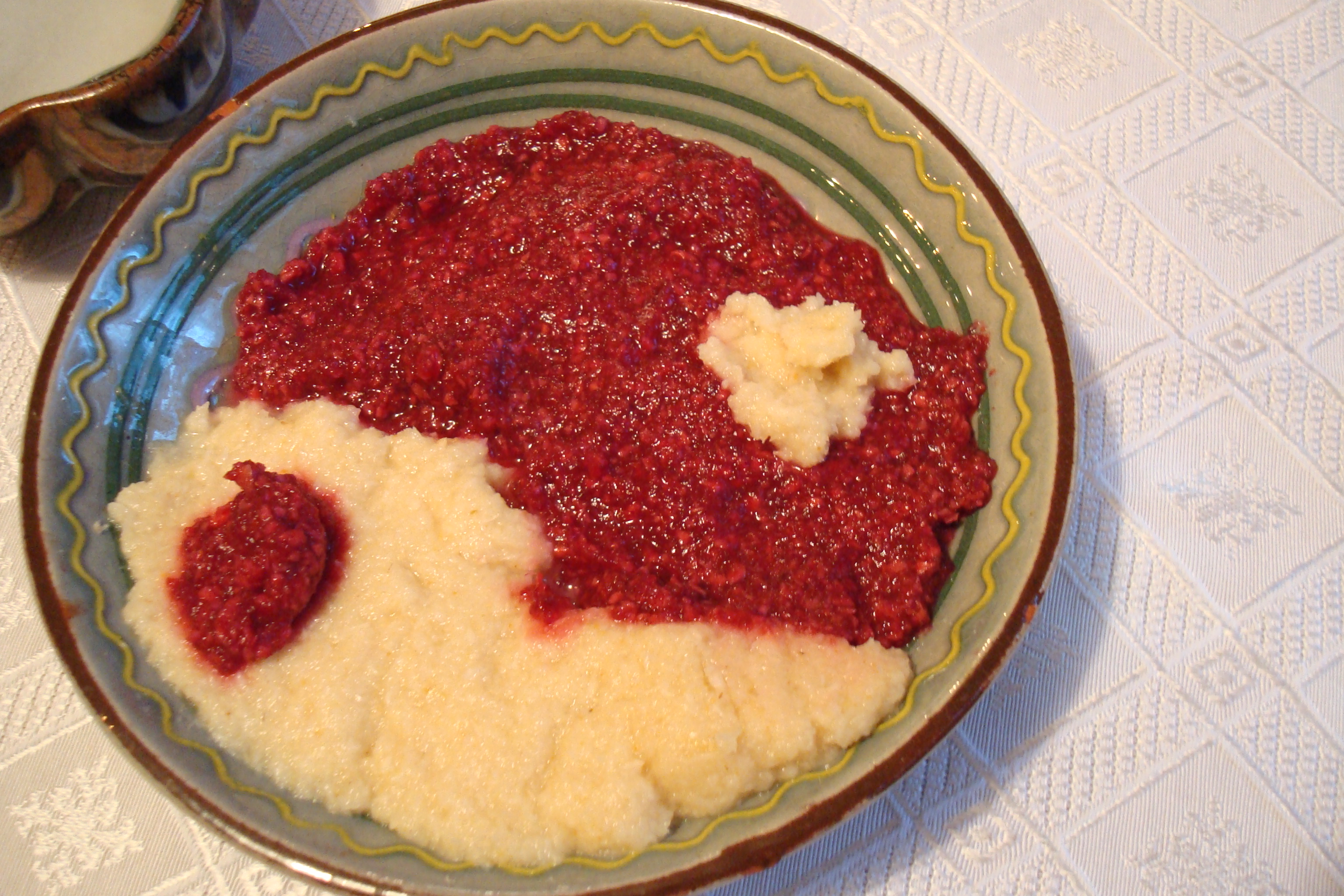
Yin-Yang Horseradish: My blended beet version with the plain prepared one from the store.

Overwintered tarragon coming up in the herb garden.
I’m so grateful for the burst of feathery, licoricey, green tarragon that’s sprung up in the garden. But at the same time I regret pulling up the horseradish root I planted. I feared the thriving thing would take over the garden. But had I let it overwinter, I would have had fresh horseradish this week. It was in short supply at the farmer’s market and food co-op. Luckily, I obtained enough to blend up some with cooked beets, vinegar, salt and sugar to make some festive horseradish to go with my salmon gefilte fish. It was especially a hit at the eclectic seder Slow Food Corvallis leader Ann Shriver and ag economist Larry Lev hosted Friday night. Now I have to see about digging up some horseradish from someone. I think the solution is to grow it in a barrel container, as I plan to do with potatoes, so the invasive root doesn’t overtake your bed. Here’s a helpful article on growing and cooking with horseradish, by garden writer Anne Raver, who I believe is based in Maryland’s Carroll County, where I worked for The Sun. She recommends grinding the root outside to cut down on its pungent mustard oil fumes. It made Dan and I choke and tear up when I went at ours indoors.

My horseradish with gefilte.
But back to the tarragon. It reminded me of to make my mom’s recipe for tarragon chicken salad, which I brought to an Easter potluck we were invited to today. The recipe couldn’t be simpler: poach chicken breasts, chop up and combine with chopped tarragon, rehydrated golden raisins, sliced toasted almonds and moisten with mayonnaise. Season to taste. To lighten it up, I used Greek yogurt instead of all mayonnaise and added some of my home-infused tarragon vinegar for a kick. I’ve still got a lot of leftover infused herbal vinegar I made last spring. Perfect for salad season!
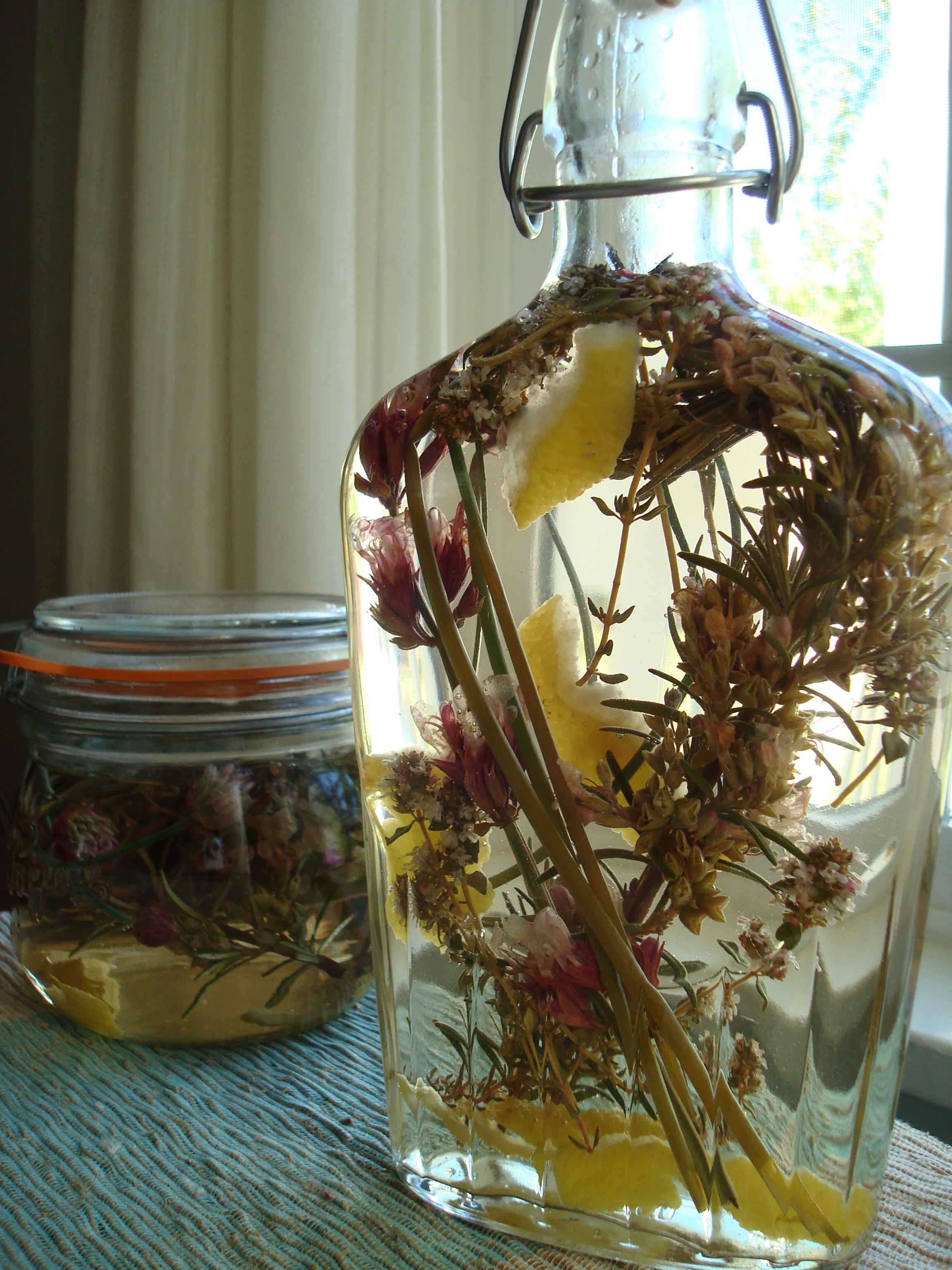
Herbal vinegars.
Israeli Seder and D.I.Y. Salmon Gefilte Fish

Seder salad plate: Israeli pickles, cucumber salad, Sephardic date charoset and celery for the karpas.

Salmon gefilte fish: I might still prefer Manischevitz.
We’ve had more seder invites than ever before here in Oregon. I guess Jews really come out of the woodwork in a small college town. Tonight we got to experience our first Israeli-style one. It was just our vibe, with only some cursory readings from the haggadah and more emphasis on the food. The presence of two toddlers throwing food around the table also added levity.
For some reason, I decided to make the gefilte fish. I had heard about a version made with salmon that is popular here in the Pacific Northwest. Wrestling the carp in the bathtub and boiling fish heads and bones into stock this is not. No, in fact my recipe simply called for grinding up fresh salmon with onions, carrots, parsley and eggs in the food processor. Then you bake the mixture in muffin cups until set. I got the recipe from the Cooking Jewish book I reviewed for The Sun. But I’m still curious about the method where you slowly boil the balls in homemade fish stock. That’s how Dan’s Bubbe, the self-proclaimed ace of gefilte fish, did it. Be sure to have your fish man grind the fish for you in advance, she stressed. I hope I get the chance to make it with her sometime.

Potato-matzo rolls.
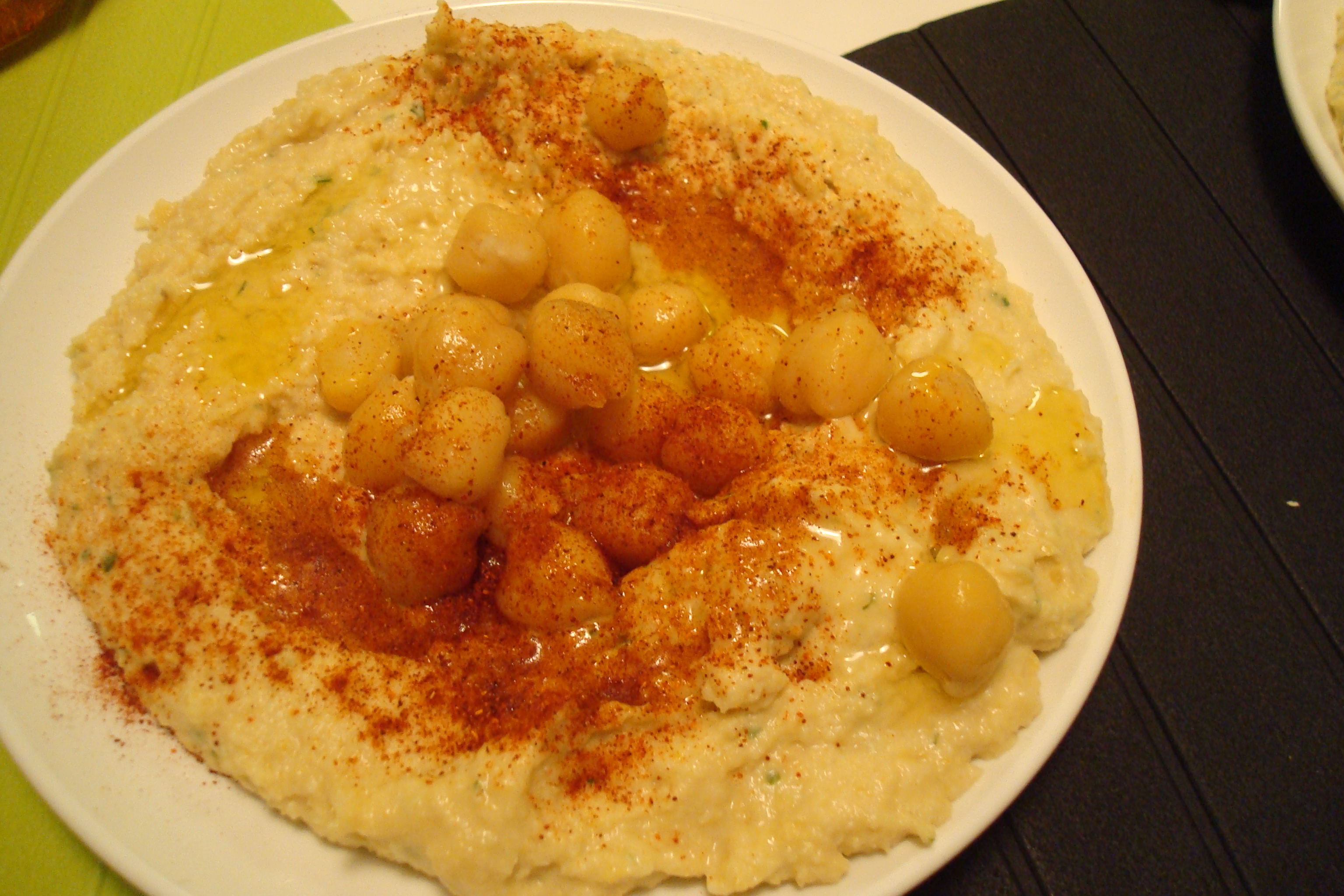
Hummus the way it should be made.
There were unusual treats at this seder table, like potato-matzo meal rolls (anything resembling bread is such a luxury), a smooth, apple-less date paste for the charoset (makes sense since apples aren’t native to region) and plates of creamy whipped hummus. The secret to good Arab/Israeli hummus seems to be the quality of the tahini or tehina (ground sesame paste) which they bring from back home. Ours seems to be thicker and clumpier here. There was no secret ingredient but the hummus was seasoned with paprika, lemon juice, garlic, cumin and olive oil. And garnished with a drizzle of oil and the whole chickpeas. The Israelis were talking of some fabled cook’s top-secret hummus recipe, perhaps that of Abu Hassan’s in Jaffa? Food preferences unite Israelis and Arabs. If only breaking more bread together could somehow lead to peace. But politics was mostly off the table tonight. In fact, the group tonight was surprised that the Corvallis rabbi would hold forth on Israel/Mid-East politics during a Yom Kippur service. But it’s so second nature for us to mix up politics, religion, etc. here.
The best thing I made was the beet red horseradish, the sweet root vegetable softening the bitter herb’s bite. Dan and I screamed and cried from the fumes that filled the kitchen as I ground up that bitter root last night. Luckily, there’s plenty more in the freezer. The ruby condiment also nicely contrasted with the pasty fish logs.
For dessert, we had a lovely flourless chocolate torte. And I indulged in the Matzo Brittle crack recipe. If you like Fleur de Sel caramels, you’ll love this. Now just one more foodie-focused seder to go, Friday. Next year at our house? We need to step up to the plate.
What’s Guanciale?

Cured hog jowl, after one week of brining and three weeks of drying.

The pig jowl, pre-cure.
Finally, some back-to-back success with curing meats, just as I’m feeling the need to go vegetarian more than ever. Fasting on a cleanse just isn’t going to happen. I love food too much. At least I’ll soon be trying to go bread-free for Passover. But for now, I’m still on pork. Just remember curing it doesn’t mean you eat much of it. It’s still hanging in the fridge, a thin lardo-like, umami-rich slice to be rationed at a time. Still, it’s thrilling to see the guanciale turn out so well, after bacon and especially pancetta proved somewhat disappointing. And guanciale is more of an investment since it hangs to dry (in the fridge this time) for three weeks after the week-long salt, sugar and spice cure.

Clear out space to hang it in the fridge: thankfully it didn't absorb those funky smells that the baking soda does.
If you haven’t heard of guanciale, you’re not alone. I hadn’t heard of it either until making this Pasta All’ Amatriciana recipe (with bacon as a substitute) in Bon Appetit recently. But unsmoked cured pork jowl just seems to have a more memorable quality that many cultures, including Southern, revere. So try some of your own. Sweet Briar Farms at our farmers’ market seemed delighted I wanted pig cheeks and jowl, those unloved cheap cuts no one ever requests. To make your own guanciale, Mario Batali seems to have the most recommended recipe. I’d like to try some more famous all’ amatriciana recipes with my finished product. Of course, I’d like to eat at Batali’s restaurants sometime, too. I’m sorry I didn’t get a chance to in Vegas last weekend.
 BaltimOregon to Maine