Posts Tagged ‘Maine’
The P’s of Perfect Pizza: Pre-Preferment (Poolish), Peel, and Parchment
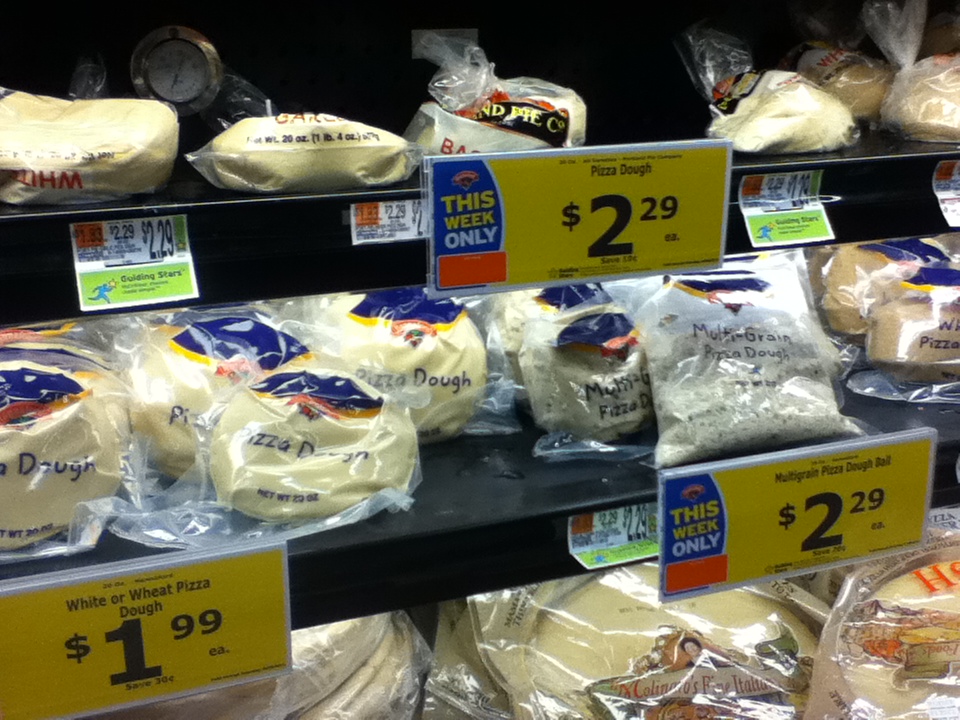
Just say no to pre-made dough! You can make much cheaper, better tasting, more satisfying dough at home.
All spring and summer, I’ve meant to blog about my new zeal for homemade pizza. We’ve enjoyed pizza with roasted asparagus (thanks Deena!), pizza with garlic scapes and clams (now in Maine I’ll only use fresh ones), pizza topped with feta, Parmesan and Pecorino, fresh mozzarella and chêvre, pizza crust made from Willamette Valley-grown hard red wheat and even some rye (Alice Waters and others recommend this addition).
The key to good homemade pizza is a good dough. And I have finally found the go-to dough of my dreams in Piper Davis and Ellen Jackson’s fool-proof recipe from their ever-reliable (Portland and Seattle favorite) The Grand Central Baking Book. I’m much more improvisational cook than methodical baker, but Davis and Jackson have me seriously considering playing for the other team. The key to good pizza, as revealed by this book, is a pre-ferment, otherwise known as a poolish or overnight starter. This quick night-before step yields an incredibly chewy yet crisp crust with bubbling air pockets like a good artisan bread. You simply mix flour, water and yeast together and let it sit for about 12 hours. It’s then riddled with holes, with the stringy consistency of melted cheese when stirred (photo is on my other camera card). Then you mix it with the other ingredients (bless you, KitchenAid dough hook!) into dough. No proofing or activating yeast with sugar or honey. Davis and Jackson are also call for a generous amount of salt. That’s key to a flavorful dough. And make sure your flour isn’t rancid. The pre-ferment softens the glutens in a tough hard whole wheat flour, so you don’t need to add white flour. I can’t locate the cookbook in my moving boxes at present, but its pan pizza recipe (which also stresses the pre-ferment) is at least online.
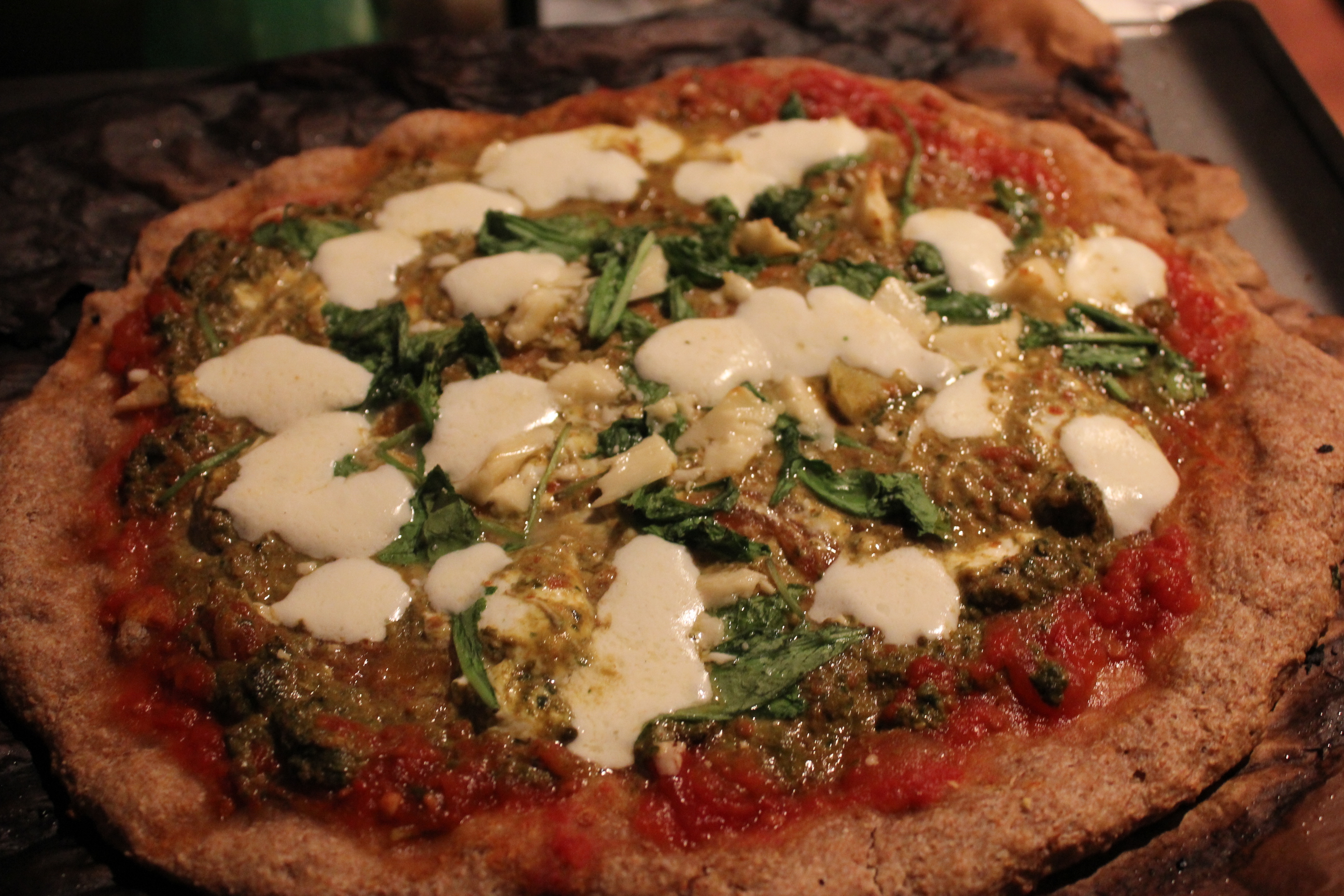
Grilled pizza for the first time, with just-made tomato sauce, fresh pesto, some wilted arugula, goat cheese, garlic, mozzarella, and Capriano, a hard aged goat cheese from York Hill here in Maine. I won’t burn the crust on the bottom next time.
A pizza peel is also almost essential (thank you, dear Intaba!). Once you have one you won’t look back. You, too, really can flick your pizza into the oven or on the grill with confidence. A pizza stone (thank you, dear Hannah!) or at least some unglazed ceramic tiles heated on the rack at at least 450 degrees 30 minutes before baking makes a world of difference. And because The Grand Central Dough is so wet (wet doughs seem to produce superior pizza), it’s hard to handle by hand (so my partner can’t show off his pizza-tossing skills), Davis and Jackson brilliantly recommend stretching it out on parchment paper. The paper chars on the edges but remains moist and intact under the dough, slipping away from the baked pizza.
Only trouble is I discovered tonight, my ChefPapel “culinary parchment” is only “oven safe” up to 425 degrees. Suggestions? Are there more heat-resistant parchments out there? This particularly was a problem when I tried to grill pizza for the first-time tonight, with temperatures that can approach 600 degrees. Any good grilled pizza techniques to recommend? I consulted this one, but my wet dough kind of stuck to and charred on the grates. Otherwise, I’m planning to go back to the stone, indoors, which will be a convenient place to stay warm in Maine this winter. Or maybe heat the stone right on the grill, in these waning days of warmth?
Maine in Oregon

The puny and neglected, poorly transplanted, yet still delicious heirloom raspberries in front of our house. Nothing compared to the fat, luscious, melt-in-your-mouth orbs thriving at Rainshine Family Farm, perhaps the best kept secret in Corvallis.
Why is it that you’ll only truly appreciate a place, deeply fall in love with it, when you’re about to leave it? For the past month, I’ve had these daily moments of reverence for Corvallis, and Oregon in general, I know I wouldn’t linger upon if we weren’t moving. At the Gathering Together Farm restaurant (our favorite place to eat around town), the Corvallis Farmer’s Market, at our food co-op (okay, we’re a bit food-centric here), our richly-sourced Asian market, in yoga and Zumba and WaterBabies classes, and at the radio station, I find myself already missing what I haven’t yet left. But we can’t look back.

How I’ll miss Oregon’s sweet cherries, including these paltry few on the tree planted in our backyard. How I’ll miss all the berries, pears, apples and even persimmons that thrive in this Eden.
We’re moving to Maine in mid-August. And it’s finally starting to feel right. My family convened on Great Pond in Belgrade Lakes about every other summer, but I’ve never been to Maine in winter. Ice-fishing, here we come. My parents are semi-retiring there; both Dan and I have lots of family around New England. We’re tired of day-long cross-country flights. We want to put down roots and stay put during summer. The trouble is, in four short years, we’ve become much more rooted here than we ever imagined.
So it felt reassuring to discover the things I love here are connected to Maine. Maine indirectly kept asserting itself on a tour of a magical 2.5-acre urban farm today. This farm I’m just now stumbling upon is surely the best-kept secret (perhaps intentionally so) in Corvallis.

Sadly forgot to plant favas this year. They are so easy to grow and, as a cover crop, naturally fix nitrogen in the soil. And it’s surprisingly delicious to eat the whole grilled or roasted pod.
And what do these Greenhorns use to sprout their starts? None other than Maine organic pioneer Eliot Coleman‘s seed-starting mix. And where do they source their heirloom, open-pollinated vegetable seeds? Not from Oregon’s lush Willamette Valley. They’ve come to put their trust in Johnny’s Selected Seeds and FEDCO, both of Maine (not far from Belgrade Lakes in fact), for the most reliable germination rates. Apparently, many seed companies sell home gardeners the dregs. Like me, many assume the fault is their own black thumb and not the seeds when they don’t sprout. Still, it was surprising to hear this Corvallis farm has to source its seeds (and many farm implements, such as soil-block maker, from as far away as Maine.
Maine is where it’s at, I keep telling myself. And we’ll see the local food scene converge in full force, soon after we arrive, at the Common Ground Fair. It’s put on by what I believe is the oldest organic-farming association. Something nice to look forward to, to balance all the missing.
And touring the farm today, I felt awash with gratitude for all that Oregon has taught this former fire escape-gardener about agriculture. In Baltimore, I grew herbs and maybe a cherry tomato in pots on my fire escape. Since moving to Oregon, I’ve grown lots of garlic and peas, rhubarb, fava beans, asparagus, carrots, potatoes, beets, tomatoes, blueberries, a few figs, most without great success since I’m bad about watering. And we’re often gone in summer (hence the desire to relocate back East). But today I knew how to recognize all the crops on this esteemed farm–the lace-y carrot tops, the feathery forests of asparagus, the buckwheat–because I’ve now tried (often in vain) to grow many of them. These struggles make you feel a sense of awe and connection to the work of these farmers.
Dungeness: Better than Lobster, Better Than Blue Crabs
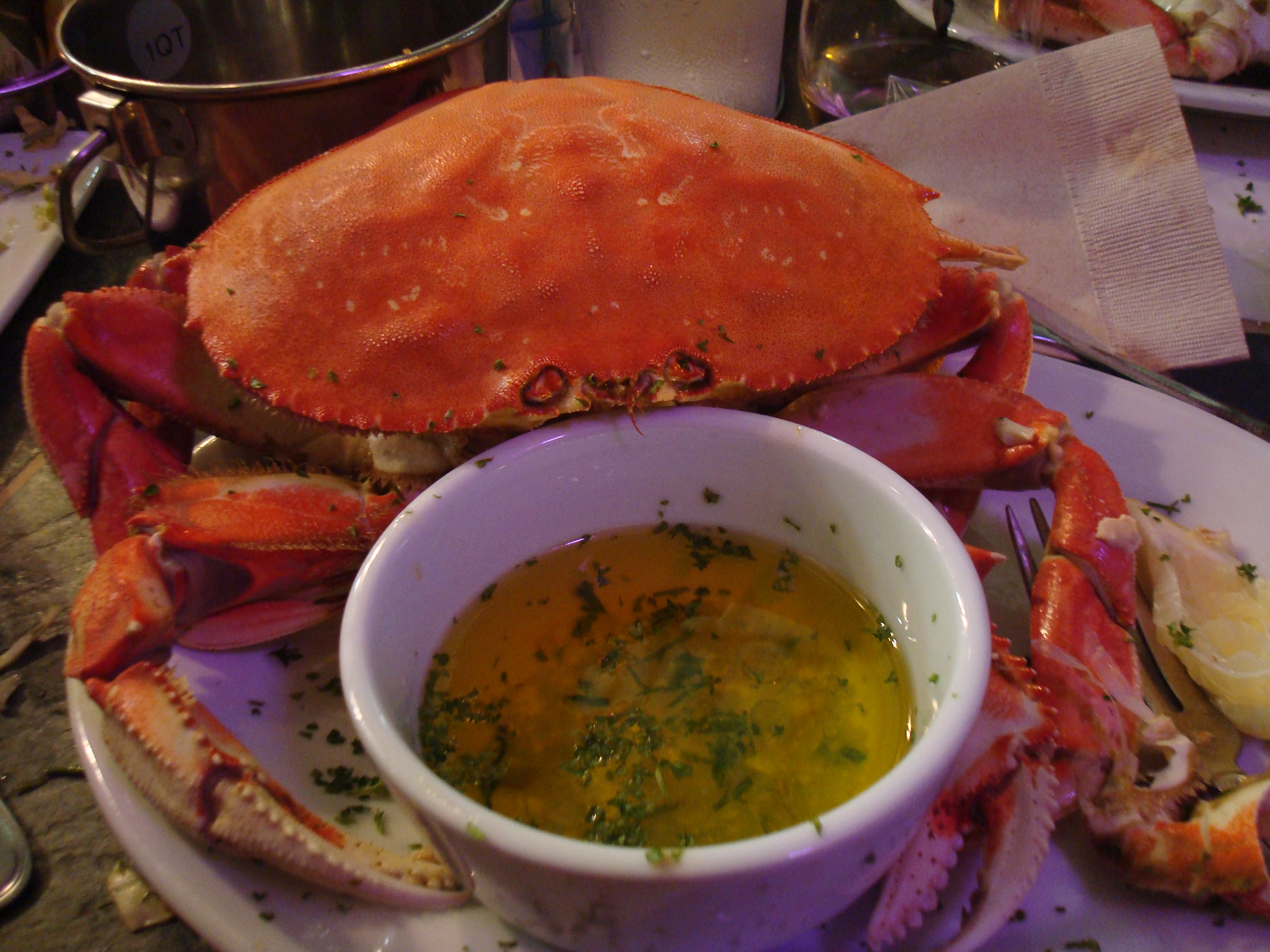
We had sweet, delicate, freshly-caught Dungeness crab on the Newport coast tonight for my parents’ last dinner here in Oregon. I know I’ll take flack for this, but I think I like Oregon’s crab better than Maine lobster or Baltimore’s blue crabs. It’s less rich.
Our timing couldn’t have been better. Dungeness crab season commenced Dec. 1. The crabbing appears to be sustainable and well-regulated here.
I recommend the Local Ocean Seafood Restaurant and fish market, where we ate, right on the Newport harbor. Raw crabs retail at the market for $4.50/pound and the staff is quite friendly.
Before dinner, we sampled beers at Newport’s famed Rogue Brewery. It’s by no means our favorite micro-brew here. But I liked the Hazelnut Brown Nectar and the Honey Orange Wheat enough to bring 22-oz. bottles of those home.
 BaltimOregon to Maine